The moments right after a traffic collision are disorienting, yet deliberate actions taken on the roadway protect both personal safety and long-term financial recovery. Once vehicle occupants confirm that everyone is uninjured and activate hazard flashers, moving away from high-speed traffic lanes becomes the immediate priority. Drivers often make the mistake of attempting to drive a visibly battered car away from the crash site. Even if an engine fires up and the wheels seem to turn, concealed fractures in steering linkages, cracked radiator end-tanks, or fractured oil pans can turn a fixable issue into an outright catastrophic failure within a few city blocks.
Engaging a professional towing service prevents secondary mechanical destruction and ensures that the vehicle travels safely to a secure storage lot or certified repair facility. Clear communication with emergency dispatchers during this initial phone call saves precious time and money. Car owners should specify their vehicle drivetrain, whether front-wheel drive, traditional rear-wheel drive, all-wheel drive, or a dual-motor electric setup. All-wheel drive and battery-electric models require flatbed transport rather than wheel-lift equipment, as dragging drive wheels can burn out internal differentials or ruin expensive electric drive units. Taking high-resolution photographs of the car before the operator hooks up the rigging provides undeniable evidence of the vehicle condition prior to transit. Collecting the driver name, transport company credentials, and drop-off documentation allows subsequent insurance claims to proceed without unnecessary locating delays.
Managing Insurance Claims and Documentation Protocols
Navigating the aftermath of a roadway accident demands careful paperwork and steady communication with claims representatives. Policyholders frequently experience pressure from adjusters to settle claims rapidly or choose a shop from a preferred corporate network. State and regional laws clearly grant drivers the absolute right to select the independent repair center they trust most. Reviewing the declaration page of an active auto insurance policy clarifies critical coverage details, including deductible obligations, collision thresholds, and limits on temporary transportation allowances. Having an accurate grasp of these numbers prevents unpleasant surprises when final repair invoices arrive.
Vehicle owners should supply adjusters with comprehensive documentation rather than vague descriptions of the impact event. This paperwork includes police incident numbers, contact information from other involved motorists, clear date-stamped photographs, and recent invoices for major mechanical upgrades completed prior to the wreck. Documenting prior maintenance demonstrates that the vehicle was in stellar condition before the crash, which supports higher valuation figures if an adjuster debates total loss boundaries. Maintaining an organized file containing claim numbers, adjuster contact records, and dated notes from every telephone conversation prevents confusion. When motorists approach claims with verifiable facts and clear records, carriers approve estimates and supplemental repair requests much faster, keeping repair timelines strictly on schedule.
Structural Realignment and Chassis Integrity
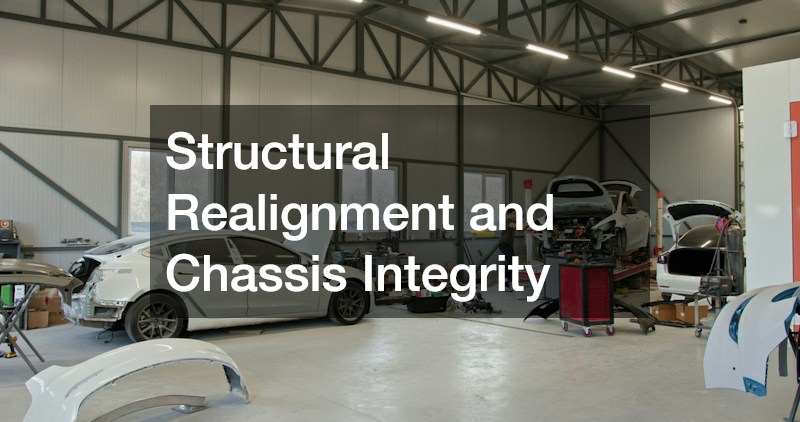
Modern vehicles rely on intricate unibody architectures engineered with specific crumple zones designed to absorb kinetic energy during an impact. When an automobile experiences heavy deceleration or direct chassis contact, that force travels along structural rails, often bending high-strength steel far away from the initial point of impact. Certified technicians utilize computerized laser measuring systems attached to heavy-duty frame racks to benchmark the vehicle against factory blueprint specifications down to the exact millimeter. Skipping this fundamental structural assessment leaves the unibody out of square, leading to premature component failure, persistent wind noise, and compromised passenger protection in future crashes.
Professional collision repair restores the structural core of the automobile to the original manufacturer’s crashworthiness standards. Specialized technicians anchor the vehicle at dedicated pinch welds and apply controlled hydraulic pressure to reverse frame rail bends and unibody distortions without hardening the metal inappropriately. Technicians must also inspect spot welds, bumper reinforcement bars, and suspension mounting perimeters for micro-cracks or metal fatigue. If structural steel components show stretching beyond allowable tolerances, technicians cut out and replace those stamped sections following precise factory sectioning procedures. Restoring correct geometry ensures that subsequent replacement parts fit flush and ensures that passenger safety cells react properly if another road incident occurs down the road.
Mechanical Diagnostics and Hidden Drivetrain Damage
Front-end and side-impact collisions rarely restrict their harm to exterior sheet metal and decorative plastic grilles. Sudden kinetic energy transfers through engine cradles, snapping hydraulic engine mounts, twisting driveshafts, and cracking delicate transmission bellhousings. Even minor low-speed bumps can force cooling assemblies backward into belt-driven engine accessories, causing water pump impellers to bind or bend delicate power steering pulleys. Comprehensive mechanical evaluation uncovers these internal defects before a vehicle returns to regular daily driving duties, preventing unexpected stranding or catastrophic engine breakdowns months later.
Experienced technicians conduct multi-point scans and pressure diagnostics through complete mechanical auto repair procedures that verify the operational safety of every moving subsystem. They check fluid lines for crimping, verify oil pan clearances, test rack-and-pinion steering gear for internal lash, and inspect complex exhaust plumbing for hairline catalyst leaks. Diagnostic scanners must interface directly with the central electronic control module to check for stored fault codes related to transmission pressure sensors, variable valve timing actuators, and electronic throttle bodies. Running the engine up to standard operating temperature on an elevated service lift allows technicians to inspect fluid circulation under real pressure. Eliminating mechanical faults early gives motorists peace of mind that their restored vehicle will perform reliably under real highway conditions.
Thermal Management and Climate Control System Recovery
The climate control network inside modern passenger vehicles is an intricate thermal system that sits directly in harm way during front-end impacts. The air conditioning condenser mounts directly in front of the engine cooling radiator, making it exceptionally vulnerable to road debris, bumper collapse, and radiator support deformation. Even a tiny bend in an aluminum line or a hair-thin puncture in the condenser core allows pressurized refrigerant to escape into the atmosphere. Running a climate control system with insufficient refrigerant starves the interior compressor of lubricating oil, causing metal-on-metal friction that quickly ruins expensive internal pump mechanisms.
Engaging a certified auto AC mechanic ensures that the entire thermal loop receives professional diagnostic recovery following an accident. Certified technicians introduce ultraviolet dye and nitrogen gas into the refrigeration circuit to pinpoint microscopic leaks across hard lines, rubber flexible hoses, and the thermal expansion valve. They also inspect the receiver-drier or accumulator for desiccant pouch rupture, which can circulate abrasive particles through the evaporator core beneath the interior dashboard. Once all damaged heat exchangers are replaced, the system undergoes a deep vacuum cycle to remove ambient moisture before being charged with precise weights of pure modern refrigerants like R-1234yf or R-134a. Proper temperature drop across the dashboard vents confirms that the vehicle cabin will remain crisp, comfortable, and safe during hot driving seasons.
Exterior Panel Reconstruction and Precise Paint Blending
After technicians confirm the underlying structural squareness and mechanical integrity of a vehicle, exterior panel fitting takes center stage. Modern vehicle exteriors consist of diverse materials, including stamped cold-rolled steel, hydroformed aluminum panels, carbon fiber reinforcements, and thermoformed plastic bumper skins. Each material responds differently to heat, pressure, and shaping tools, demanding specialized skills from automotive metalworkers. Realigning fender gaps, hood shut-lines, and door seams to exacting factory tolerances prevents wind whistle, eliminates water leaks, and restores the original visual silhouette of the vehicle.
Skilled artisans perform meticulous auto body repair to iron out surface imperfections, correct metal stretching, and replace ruined outer skins with certified original-equipment panels. Once metal smoothing and minimal filler work conclude, panels move into computerized preparation booths for primer applications and surface block sanding. Professional refinishing requires sophisticated computerized spectrophotometers to scan adjacent weathered panels and formulate custom paint formulas that compensate for solar fading and metallic flake distribution. Spraying the base coat and multiple layers of durable clear coat inside downdraft spray booths ensures a mirror finish free from dirt nibs, orange peel, or paint blending lines. Applying infrared curing lamps hardens the finish to automotive showroom standards, delivering flawless aesthetics that protect the underlying steel from long-term weather corrosion.
Wheel Assemblies, Suspension Dynamics, and Road Contact
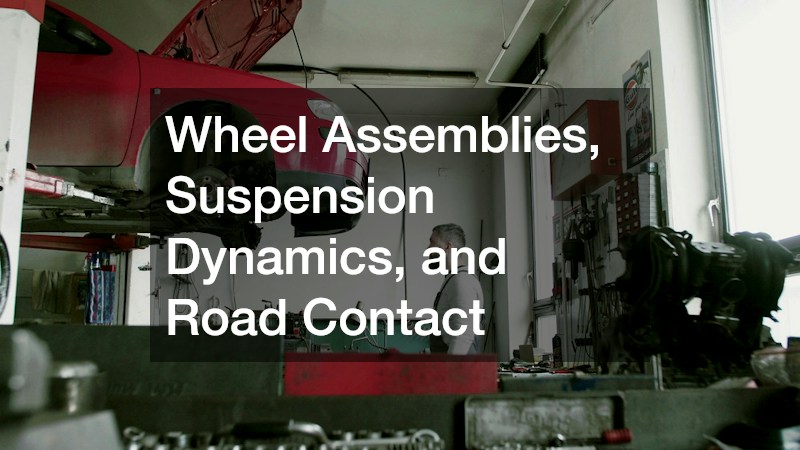
Curbs, road debris, and lateral collisions impart violent forces through the wheels directly into the steering knuckles and control arms. Even if an alloy rim shows only surface rash, the underlying aluminum casting might harbor micro-fractures that threaten sudden failure at highway speeds. Technicians mount wheels onto dynamic balancing machines to measure lateral and radial run-out, confirming that wheel rotation remains true within thousandths of an inch. Bent hubs, worn wheel bearings, and deformed tie rods must be identified and replaced immediately to prevent dangerous handling instability.
Accident trauma frequently inflicts hidden damage upon tires, such as internal belt separations, torn beads, or sidewall bulges that might not appear until pressurized under driving heat. Technicians thoroughly inspect the rubber tread blocks for uneven wear patterns that indicate severe suspension misalignment. When replacement becomes necessary, matching tread depth, load index, and speed ratings across the axle ensures balanced traction during aggressive braking maneuvers. Completing four-wheel computer alignment restores camber, caster, and toe angles back to original factory parameters, guaranteeing predictable steering tracking and extended tread life.
Safety Glass Integrity and Driver Assistance Calibration
Automotive glass provides critical structural strength to modern passenger cabins, contributing up to thirty percent of structural roof support during rollover incidents. Heavy impacts routinely flex the unibody, introducing stress fractures along the edges of laminated safety glass that spread rapidly across the driver’s field of vision. Prompt attention to chips and localized cracks through specialized windshield repairs preserves structural strength, stops crack propagation, and restores optical clarity without requiring complete pane extraction. When cracks extend across primary sightlines or reach glass edges, technicians install OEM laminated glass using high-modulus polyurethane adhesives cured under controlled environmental conditions.
Replacing modern automotive glass involves much more than simple adhesive bonding. Forward-facing cameras, rain sensors, and collision-avoidance radar systems mount directly behind the upper portion of the windshield. Technicians utilize specialized optical target boards and digital scan tools to perform static and dynamic calibrations of these advanced driver assistance systems. Accurate calibration ensures that automated emergency braking, lane departure alerts, and adaptive cruise control modules calculate road distances with absolute precision, protecting occupants when unexpected traffic hazards arise.
Solar Radiation Defense and Cabin Glass Reconditioning
Replacing broken side or rear glass during post-accident restoration often leaves a vehicle looking mismatched, as factory privacy glass or aftermarket tint on undamaged windows contrasts sharply with new, untinted replacement panes. In addition to aesthetic uniformity, automotive solar films play an essential role in preserving cabin electronics, leather upholstery, and interior trim from premature degradation caused by ultraviolet rays. High solar heat loads also force climate control compressors to work harder, consuming additional fuel and placing unnecessary strain on freshly repaired cooling components.
Visiting a professional window tinting service restores visual consistency and delivers significant functional advantages across the entire passenger cabin. Technicians apply precision-cut ceramic films that filter out up to ninety-nine percent of damaging ultraviolet radiation while rejecting substantial amounts of infrared heat. Ceramic technology provides these thermal benefits without interfering with cellular phone reception, satellite navigation signals, or radio antennas embedded directly within glass layers. Upgrading replaced windows with matching solar film restores a clean, cohesive exterior appearance and keeps interior temperatures remarkably comfortable during bright summer road trips.
Restoring Aftermarket Equipment and Final Road Readiness
Many modern vehicles feature aftermarket enhancements that require specialized attention after an impact event. Modifications like aftermarket suspension lift kits, performance air intakes, custom exhaust systems, auxiliary off-road lighting, and aerodynamic spoilers often suffer subtle damage that general insurance estimators overlook. Rebuilding these components requires technicians who understand non-factory geometry, aftermarket wiring harnesses, and custom bracket fabrication. Overlooking modified equipment leaves the vehicle mechanically compromised and depresses overall market value when owners eventually decide to sell or trade.
Skilled technicians with experience in auto customization evaluate aftermarket additions to confirm proper mounting torque, clearance margins, and electrical load protection. They replace bent suspension links, rewire damaged auxiliary switches, and re-tune performance accessories so that every custom modification operates in harmony with restored factory systems. Before handing the keys back to the owner, technicians conduct a multi-point road test on varied road surfaces to verify throttle response, cabin quietness, suspension dampening, and straight tracking. Once final torque checks on all fasteners conclude and interior detailing cleans away shop dust, the fully restored automobile stands ready for thousands of miles of safe, reliable driving.