An automobile collision disorients even experienced motorists. In the immediate moments after metal meets metal, shock and confusion often cloud sound judgment. Drivers need to take a breath, check themselves and their passengers for injuries, and turn on the hazard flashers to alert oncoming traffic. If the vehicle can still roll and the road is active, steering onto the shoulder or an adjacent parking lot helps prevent secondary impacts. When a damaged car remains disabled in an active lane of travel, occupants should exit if safe and move behind a highway guardrail.
Once personal safety is addressed and emergency services have been notified, attention turns toward moving the damaged machinery. Modern vehicles feature delicate drivetrains, all-wheel-drive transfer cases, and low-profile aluminum suspension parts. Dragging a disabled car onto a traditional hook can crack oil pans or twist drive axles. This is why professional towing services play an essential part in the earliest phase of post-accident recovery. Qualified transport operators use flatbed haulers, soft-strap rigging, and dedicated wheel dollies to load the automobile without introducing fresh stress to the chassis.
Drivers should take clear photographs before the car leaves the scene. These images record the initial resting state of panels, wheel angles, and fluids, providing an honest baseline for insurance adjusters.
Assessing Structural Alignment and Frame Tolerances
Once the automobile arrives at an authorized facility, technicians look past shattered bumpers and peeling paint to examine the underlying skeleton. Contemporary automobiles rely on unibody structures built from high-strength steels. These metals form a rigid passenger cell flanked by engineered crumple zones designed to absorb kinetic energy during an impact. Even a modest collision on a bumper corner can transmit shock waves deep into the subframe, kicking the strut towers out of alignment or buckling the floor pan.
A thorough car collision repair begins with three-dimensional laser measuring systems. Technicians mount the chassis onto a dedicated alignment bench, attaching electronic targets to factory datum points along the rocker panels, frame rails, and suspension mounting perches. The digital system compares the vehicle’s current geometry against factory blueprints down to the millimeter. If the frame shows sway, sag, or twist, hydraulic pulling towers apply controlled tension to reverse the deformation.
Rushing this stage compromises the safety of every future occupant. If a frame rail is pulled improperly or heated without following factory guidelines, the metal loses its temper. Technicians must document every structural pull and, when necessary, install replacement frame sections using manufacturer-specified spot welds and structural adhesives.
Mechanical Diagnostics and Powertrain Inspection
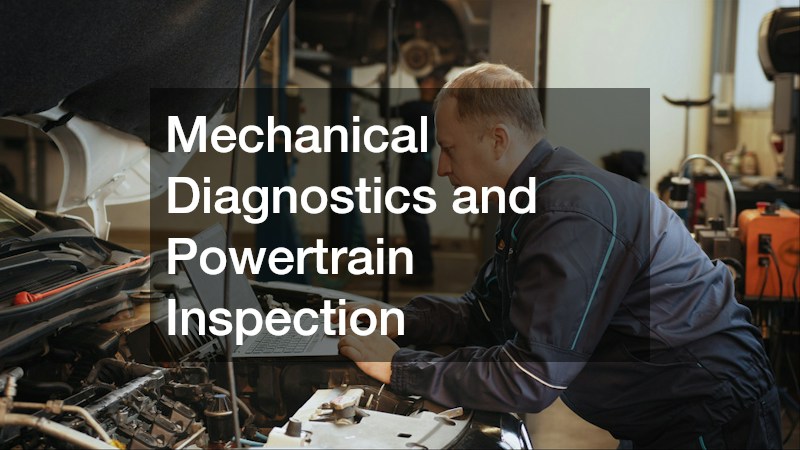
While structural technicians focus on unibody dimensions, mechanical specialists must evaluate the powertrain and cooling architecture. Even when an engine block escapes a direct hit, the sudden deceleration of an impact stresses mounts, cracks plastic intake manifolds, and snaps serpentine belt pulleys. Radiators and air conditioning condensers often fold inward, pressing sharp edges against accessory brackets or slicing delicate rubber coolant hoses.
Skilled auto mechanics approach post-crash vehicles with diagnostic scanners and physical pressure gauges. They pull fault codes from the engine control module, looking for misfire counts, sensor circuit interruptions, and thermal spikes recorded during the impact. A bent motor mount might tilt the engine just enough to pinch a wiring harness against the firewall, creating intermittent electrical shorts that could cause stalling weeks down the road.
Beyond the engine bay, specialists inspect the exhaust system, steering rack, and driveline components. An impact that shoves a front wheel rearward can push the drive axle straight into the differential or transaxle housing, cracking the casing or ruining internal bearings. Specialists drain fluid samples to look for metallic flakes that reveal internal gear shock. Only after the powertrain passes cooling pressure tests and computerized diagnostics can a vehicle safely move forward.
Restoring Deceleration Systems and Hydraulic Lines
Few automotive assemblies bear more responsibility for passenger survival than the deceleration hardware. During an accident, drivers instinctively press the pedal with maximum force, sending hydraulic pressures soaring through lines, proportioning valves, and antilock modules. When suspension arms bend or wheel hubs take direct side blows, the hydraulic lines and electronic sensors connected to them face severe physical trauma.
Technicians must strip down the brake assembly on every wheel station to verify that no hidden damage lingers behind the rims. Flexible rubber hoses can develop internal tears that act like one-way check valves, trapping pressure and causing pads to drag, overheat, and glaze the steel friction surfaces. Hard steel lines running along the underbody must be checked for pinches, kinks, or stone punctures caused by flying collision debris.
Technicians also evaluate the master cylinder and the antilock hydraulic unit. Sudden backward pressure pulses from impacted calipers can damage internal seals, resulting in a soft pedal or uneven pressure distribution across the vehicle. Technicians flush the entire hydraulic circuit with fresh, moisture-free fluid, cycle the antilock solenoid valves electronically, and measure rotor runout with dial indicators. A vehicle must demonstrate balanced, predictable stopping behavior before receiving clearance to drive.
Wheel Assemblies and Road Contact Safety
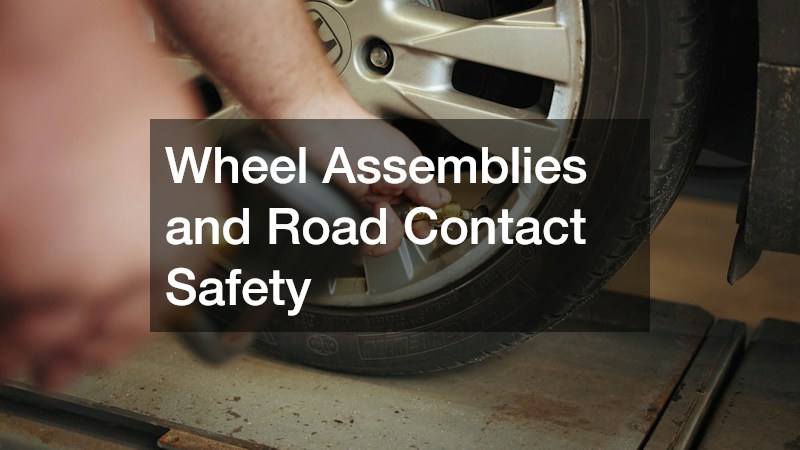
The forces of an impact travel directly through the circular rubber contact patches that keep a vehicle glued to the tarmac. Even when an alloy wheel appears intact from a few feet away, striking a curb, road divider, or another car during an accident imparts severe shock to internal tire structures. Hidden ply separations, torn bead bundles, and internal cord snapping can cause a catastrophic blowout days or weeks after the initial incident.
Technicians dismount damaged tires from their rims to inspect the inner liner for air blisters, run-flat heat rings, or foreign debris punctures. If the impact gouged the alloy wheel, the rim must be checked on a digital balancer for radial and lateral runout. A bent wheel hub or cracked spoke can never be balanced out with lead weights; such structural wheel flaws require replacement to prevent steering vibrations and premature wheel bearing wear.
Replacing rubber on a damaged corner requires careful matching across the entire axle. Modern traction management, stability systems, and all-wheel-drive computers depend on identical rolling circumferences. Installing a brand-new tread alongside three worn units can trick wheel speed sensors into thinking one corner is constantly slipping. Technicians confirm that tread depth, load index, and speed ratings conform to manufacturer specifications.
Outer Panel Straightening and Paint Matching
Once the skeletal and mechanical foundations are proven sound, the vehicle enters the cosmetic restoration bays. This stage addresses external sheet metal, polymer bumpers, aluminum hood skins, and composite quarter panels that sustained dents, creases, or deep scratches. Skilled metalworkers use specialized dent-pulling pins, hammer-and-dolly methods, and plastic welding equipment to reshape components back to their original contours.
Modern auto body repair blends traditional metal shaping with advanced materials science. When steel or aluminum panels suffer sharp creases that stretch the grain of the metal, technicians determine whether cold working will restore the shape or if the panel must be unbolted and replaced. For plastic bumper covers and rocker moldings, hot nitrogen plastic welders fuse identical thermoplastic filler rod into gouges, returning flexible parts to structural soundness without heavy layers of body filler.
After shaping, the panels undergo sanding and application of corrosion-inhibiting primers. The car then rolls into a climate-controlled downdraft spray booth to eliminate airborne dust. Paint technicians use computerized spectrophotometers to scan adjacent, undamaged panels, formulating an exact color match. They apply basecoats in uniform passes followed by high-solid clearcoats baked at elevated temperatures, producing a factory-matching texture and deep gloss.
Windshield Integrity and Resin Restoration
An automobile windshield provides far more than wind and weather protection; it serves as a structural component of the passenger cabin. In a rollover event, the laminated front glass provides substantial roof support, helping prevent the pillars from collapsing inward. During an accident, flying pebbles, broken plastic clips, or deployed hood hinges frequently strike the glass, creating small bullseyes, half-moons, or star breaks.
If the damage is caught early and measures less than the size of a dollar bill, professional windshield crack repair offers a fast and effective way to restore structural stability. Technicians clean the impact point of loose silica dust and moisture, mount an injector bridge over the pit, and draw a vacuum to extract trapped air from the fractured glass layers. They then force an optically clear, UV-curable acrylic resin into every micro-fissure under controlled mechanical pressure.
Once the resin fills the void, a technician cures the compound with ultraviolet light, bonding the split glass surfaces together. This restores optical clarity and prevents road vibrations or temperature shifts from turning a minor stone strike into an expansive split across the driver’s sightline. When completed promptly, the resin treatment prevents glass waste and preserves the original factory seal around the perimeter of the windshield frame.
Complete Glazing Renewal and Driver Assistance Setup
When damage spreads across the driver’s primary viewing zone, reaches the outer perimeter of the glass, or shatters the inner laminate, resin fixes are no longer safe or legally compliant. At this juncture, the vehicle requires complete removal and renewal to preserve cabin safety. Technicians cut out the compromised glass using specialized cutting cords, taking care not to scratch the protective paint coating on the pinchweld, which could invite corrosion over time.
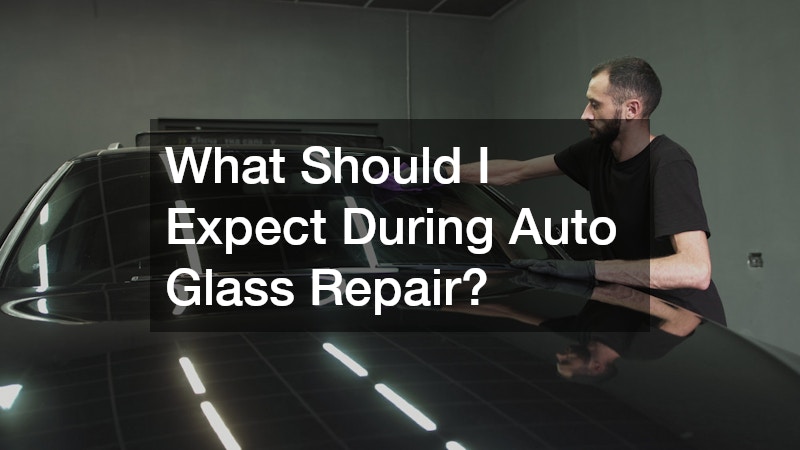
Executing a proper auto glass replacement demands precision and strict adherence to adhesive curing windows. Technicians apply specialized metal primers and lay down a uniform triangular bead of high-modulus polyurethane adhesive. The new acoustic laminated windshield is positioned with vacuum suction cups to guarantee exact spacing. The vehicle must sit stationary until the urethane passes its minimum drive-away threshold, ensuring the glass can withstand passenger airbag deployment forces without detaching.
Modern windshield installations do not stop with the adhesive cure. Most recent vehicles house forward-facing cameras, rain sensors, and optical modules behind the glass near the rearview mirror. After the new panel is secured, technicians perform static and dynamic calibrations using optical targeting boards and diagnostic drive cycles. This ensures that lane departure warnings and emergency forward avoidance systems interpret distances and road markings with absolute geometric accuracy.
Electronic Security Recovery and Key Coding

Severe collisions frequently trigger vehicle security lockdowns designed to minimize electrical fire risks. Modern vehicle control networks often sever primary electrical feeds via pyrotechnic safety switches and engage security lockouts on door latches, electronic steering columns, and immobilizer modules. During the confusion of a crash and subsequent transport, smart fobs also get misplaced, cracked, or water-damaged.
Qualified car locksmiths step in to navigate these intricate security networks without causing trauma to the body control computer. Using dedicated transponder programming tablets, they access the vehicle’s onboard diagnostic port or read security data directly from the immobilizer chip. They clear lost keys from system memory, code replacement smart fobs, and verify that the transponder handshakes correctly with the engine control module to allow starting.
Beyond programming digital fobs, these specialists inspect mechanical lock cylinders that may have jammed during the impact. When side collision forces deform door shells, exterior handles and internal linkage rods can bind, preventing physical keys from turning or safety latches from disengaging. Locksmiths verify that mechanical override keys inside smart fobs are cut correctly and turn smoothly in the driver door lock cylinder, giving motorists a dependable manual way to enter their vehicle even if electrical power fails.
Solar Defense, Interior Detailing, and Showroom Handover
With all mechanical, structural, safety, and security systems certified, the vehicle approaches the finish line. A proper rebuild must also address occupant comfort and long-term cabin preservation. Fresh glass and newly painted doors leave vehicle interiors exposed to intense solar radiation and glare, which can dry out leather seating surfaces and fade interior plastics over time.
Scheduling a car tinting service provides the finishing functional touch for a freshly rebuilt automobile. Technicians clean replacement windows meticulously in a filtered environment before applying precision, computer-cut ceramic or carbon film to the interior glass surfaces. High-performance window films reject up to ninety-nine percent of harmful ultraviolet rays and significantly cut infrared heat transfer. This keeps the cabin cooler during summer months and eases the workload on the recently serviced air conditioning compressor.
The final phase of the restoration playbook focuses on thorough inspection and detailing. Technicians wash the exterior, hand-buff clearcoat blends, and vacuum every remnant of collision dust, glass fragments, and polishing compound from carpet fibers and seat tracks. A shop supervisor conducts an extensive road test, evaluating tracking, stopping balance, engine smoothness, and cabin wind noise. Only when the automobile meets factory tolerances and sparkles under inspection lights is the vehicle cleared for owner handover, ready to provide years of dependable service.