A motor vehicle crash disrupts your life in a fraction of a second. Amid the blare of sirens, the haze of deploying airbags, and the immediate surge of adrenaline, you are abruptly forced to shift from a shaken driver into an impromptu project manager. The hours and days following a crash demand a barrage of high-stakes technical, legal, and financial choices. For many motorists, the first instinct is to surrender the wreckage entirely to an insurer, accept whatever initial payout appears on an adjustment sheet, and walk away.
Navigating this recovery journey demands a structured approach. Every decision you make—from how the vehicle is towed from the scene to how you challenge insurance adjustment software—determines whether you absorb a devastating loss or walk away with a preserved financial asset. The following sections provide an actionable, in-depth roadmap designed to demystify structural frame pulling, powertrain diagnostics, insurance buyback negotiations, and restorative refinishing, turning unexpected chaos into a controlled, value-driven restoration.
Immediate Post-Crash Logistics and Secure Vehicle Transport
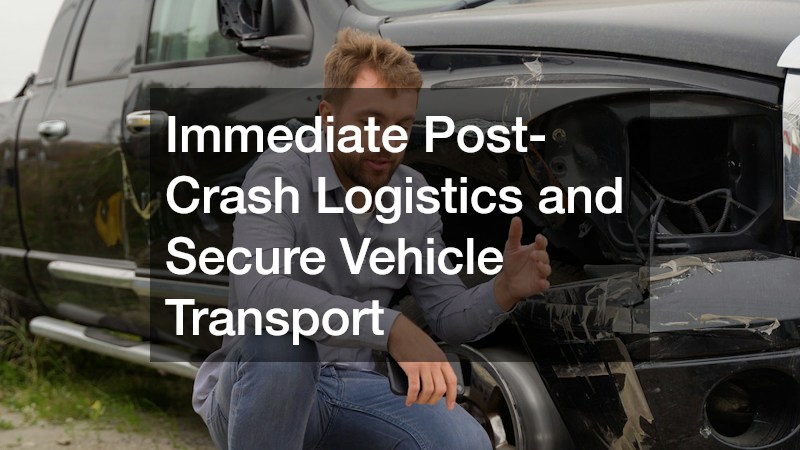
The physical recovery of a collision-damaged vehicle begins before the dust has settled on the asphalt. In the chaotic aftermath of an accident, vehicle owners frequently overlook how handling and transporting a compromised chassis can cause thousands of dollars in secondary, unforced damage. A vehicle with crushed body panels, sheared control arms, or a shifted subframe cannot be treated like a simple stalled commuter car. Careless recovery practices will buckle unibody panels that were completely straight after the initial impact, turning a salvageable car into true scrap.
Thorough on-scene documentation must take precedence before anyone hooks a winch cable to your chassis. While emergency personnel secure the perimeter, use your smartphone to capture extensive, high-resolution photographs of the vehicle from every angle:
- Photograph ground-level crush zones, taking detailed images of the bumper beams, rocker panels, and wheel wells.
- Document fluid leak trails to establish whether fluid escaped from the radiator, transmission lines, or engine block prior to transport.
- Record the exact resting angle of the suspension assemblies, noting whether wheels are cocked at abnormal angles or pressed against the inner fenders.
- Capture panoramic context shots of the roadway, skid marks, curb impacts, and debris fields, as these physical artifacts prove crucial during later claims evaluations.
You must insist on using a roll-back flatbed recovery vehicle equipped with nylon wheel straps and soft rigging bridles. When dealing with full-size commercial pickups, modified utility rigs, or heavy utility vans, selecting an experienced local truck towing company ensures the recovery crew possesses the heavy-duty flatbed equipment, winch capacity, and specialized dollies needed to load a locked-up or suspension-damaged vehicle without tearing away fragile undercarriage parts.
Equally important is directing where the vehicle is delivered. Never allow a recovery operator to tow your damaged automobile to an unmonitored private impound yard unless local law enforcement mandates an immediate clear of the roadway. Storage yards levy predatory administrative gate fees and daily holding rates that easily exceed one hundred dollars per day. If a car sits in an impound lot over a long holiday weekend while you wait for an adjuster, storage fees can rapidly swallow a large portion of your equity. Direct the driver to transport the vehicle directly to your primary residence, a secure storage space you control, or a vetted diagnostic shop.
Navigating Claims, Buyback Options, and Legal Leverage
After the vehicle is safely transported, the financial battle shifts to desk adjusters and computer algorithms. Understanding the mechanics of how insurance companies evaluate collision damage gives you the leverage necessary to protect your investment. Most vehicle owners assume that when an insurance company declares an automobile a total loss, the car must be turned over to the insurer for destruction. In reality, a total loss declaration is merely an economic formula, not an absolute decree on whether the vehicle can be safely repaired.
Insurers evaluate total losses using the Total Loss Formula or a statutory percentage threshold established by individual state insurance departments. Typically, if the estimated cost of repairs combined with the projected salvage scrap value exceeds seventy to eighty percent of the vehicle’s Actual Cash Value (ACV), the company writes it off. Insurers deliberately write conservative repair estimates inflated with brand-new OEM retail pricing and high dealership labor rates, making cars cross total-loss thresholds easily.
If you understand the true mechanical status of the car, you can initiate an owner-retention settlement, commonly referred to as buying back your totaled car:
- The insurance carrier issues a gross settlement payout based on the verified pre-accident actual cash value of your car.
- The company deducts the projected wholesale bid the wreck would fetch at an auction, along with your collision policy deductible.
- The insurer cuts you a check for the net difference, and you retain complete, physical ownership of the vehicle and its physical title.
- You then take that cash settlement and coordinate repairs independently using remanufactured parts, recycled assemblies, and specialized independent labor, often completing the reconstruction for a fraction of the insurer’s automated estimate.
Securing a fair Actual Cash Value requires defensive homework. Insurance companies rely on third-party valuation software that frequently undervalues older or specialized vehicles by pulling lowball regional market comps that lack your car’s options, packages, or documented service history. Compile receipts for recent maintenance, documented upgrades, fresh tire installations, and pristine interior condition records to push back against initial baseline valuations.
When collisions involve disputed liability, severe bodily injuries, or multiple commercial parties, the pressure from insurance carriers increases dramatically. Claims adjusters may attempt to rush you into signing broad release waivers that strip away your rights to supplemental damage discovery or fair property compensation. Retaining experienced auto accident attorneys ensures your financial interests remain protected while complex liability and diminished value claims are thoroughly litigated, preventing carriers from shortchanging your property settlement.
If you proceed with an owner-retention rebuild, you must understand your state’s salvage title processes. Most jurisdictions require surrender of the original clean certificate of title in exchange for a branded salvage title. Once repairs are completed, the vehicle must pass rigorous state inspections. These inspections verify that all safety systems function properly and audit parts receipts to confirm no stolen components were used. Once passed, the title is rebranded as a rebuilt title, allowing the vehicle to be legally registered and insured for the road once more.
Structural Integrity, Frame Pulling, and Body Realignment
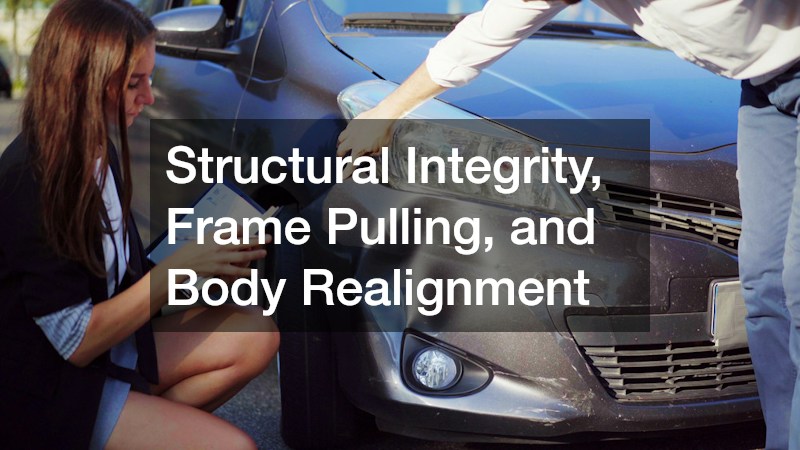
The single most critical factor in determining whether a collision-damaged automobile can be resurrected is the structural integrity of its underlying frame or unibody architecture. A vehicle can run flawlessly and boast pristine paint, but if its primary structural rails are twisted or its crumple zones are crushed, it will not protect occupants in a subsequent crash. Restoring structural alignment requires precise diagnostic measurement and heavy industrial realignment tools.
Automobiles built today fall into two distinct structural categories: body-on-frame and unibody construction. Heavy trucks and full-size SUVs utilize body-on-frame designs, where the powertrain and passenger cabin bolt directly onto an independent, rigid steel ladder frame. Modern passenger sedans, hatchbacks, and crossovers feature unibody construction, integrating the outer body panels, floor pans, firewalls, and subframe rails into a single load-bearing shell. Unibody platforms absorb impact forces through engineered crumple zones—accordion-like structures that collapse to dissipate kinetic energy away from the passenger cabin.
Assessing this structural damage demands computerized measurement:
- Laser and Sonar Measuring: Modern technicians mount the vehicle to a rigid anchoring frame and utilize electronic laser scanning systems. These scanners measure hundreds of factory-specified datum points along the undercarriage, comparing them against original engineering blueprints down to the exact millimeter.
- Identifying Directional Displacement: Technicians identify specific categories of structural deformation, including sway (horizontal displacement to one side), sag (vertical downward droop), mash (length reduction from front or rear collapse), and diamond twist (where one side rail shifts forward or backward relative to the other).
- Evaluating Structural Pillars: The A, B, and C pillars framing the doors and roofline must be verified. Any pinching or rippling along roof rails or door apertures indicates severe stress propagation through the safety passenger cage.
Straightening modern structural metal requires advanced hydraulic machinery. You cannot pull structural steel with hand winches or backyard chains; high-strength and ultra-high-strength steels possess molecular memory that requires controlled, multi-ton hydraulic tensioning. When selecting repair partners, seek out an experienced, certified collision repair service equipped with computerized drive-on frame benches. Skilled technicians apply calculated hydraulic counter-pulls while cold-stressing the metal, slowly pulling structural rails back into factory tolerance specifications without tearing the underlying steel.
Choosing between independent auto shops requires looking past basic marketing claims. Confirm that a facility’s structural technicians hold active I-CAR Gold Class or ASE Master Collision Repair certifications, verify they use squeeze-type resistance spot welding equipment to duplicate factory welds, and ensure they provide printouts showing before-and-after chassis alignment measurements.
Heavy Mechanical Triage and Drivetrain Rebuilding
Once the chassis is straight and verified on a frame bench, your attention must turn to mechanical triage. Front-end and side-impact collisions transmit shock waves directly through the vehicle’s mechanical drivetrain. Even if an engine turns over following an accident, hidden kinetic damage can cause premature mechanical failure within weeks of returning to the road.
Begin your mechanical audit by inspecting the structural engine and transmission mounts. Motor mounts consist of cast-aluminum or stamped-steel brackets bonded to dense rubber or fluid-filled hydraulic isolators. In a hard collision, the immense kinetic mass of the engine and transmission tries to keep moving forward or sideways. This force frequently shears mounting bolts clean off or snaps cast-aluminum mounting ears on the engine block. A displaced engine pulls and kinks rigid air conditioning hardlines, pinches radiator hoses, stretches wiring harnesses, and pulls drive axles out of their differential seals.
Check the mechanical assemblies methodically:
- Check the driveshafts, constant-velocity (CV) half-shafts, and differential cases for twisting, fractured boots, or hairline cast-metal cracks caused by impact forces feeding back through the front wheels.
- Inspect the accessory drive system, checking that the crankshaft pulley and harmonic balancer are not chipped or wobbling out of true, which destroys the main crankshaft seals.
- Pressure-test the engine cooling network, including the radiator, heater core, and auxiliary oil coolers, verifying that sudden chassis compression did not crack plastic side tanks or split aluminum brazing seams.
- Audit the electrical harness for pinched wires along the inner fenders, as ground wires crushed between metal panels will cause mysterious electronic faults that take weeks to diagnose.
If internal gear clusters are damaged or the cast-metal casing is split, investing in a complete transmission replacement becomes necessary to make the car roadworthy again. Rather than paying retail dealership prices for a factory-new assembly, source low-mileage recycled original units from licensed automotive recyclers or purchase certified remanufactured transmissions that come with multi-year warranty protections.
Specialized platforms demand distinct mechanical protocols. When salvaging heavy-duty pickups, commercial work vehicles, or diesel-powered haulers, the extreme operating pressures and heavy curb weight introduce unique challenges. Severe front impacts can split high-pressure intercooler boots, damage variable-geometry turbochargers, crack cast-iron exhaust manifolds, or fracture high-pressure common-rail fuel systems that run past thirty thousand pounds per square inch. Partnering with seasoned local diesel mechanics guarantees that heavy-duty fuel systems, complex emissions equipment, and robust drivetrains are restored using correct industrial diagnostic software and heavy-torque tools.
Wheels, Undercarriage Safety, and Running Gear Restoration
A vehicle cannot handle safely or track true down the highway if its suspension geometry and running gear are compromised. The running gear absorbs brutal side loads during collisions, particularly when an automobile spins out, jumps a curb, or sustains direct impact to a wheel face. Because suspension components are engineered to absorb stress, they often bend or crack quietly, leaving behind hidden safety hazards that compromise high-speed stability.
After verifying the suspension linkage, turn your focus to the wheels and rubber. Aluminum alloy wheels are prone to internal structural damage during collisions. A wheel that looks perfectly fine on its outer face may have a bent inner barrel, hairline stress cracks radiating from the lug holes, or damaged bead seats that bleed air pressure under hard cornering loads. Steel wheels can often be trued, but cracked or warped aluminum wheels should be replaced immediately.
Running gear restoration requires updating your car tires to ensure reliable traction. A violent impact can tear internal polyester cord layers, break internal steel belts, or cause sidewall bubbling that leads to a catastrophic blowout at highway speeds. Inspect every tire for flat-spotting caused by emergency lockup, sidewall scrubbing from curb strikes, and tread gouges caused by pushed-in metal fenders.
Proper alignment is mandatory following any mechanical collision repair. You cannot eyeball suspension settings. Have the car placed on a four-wheel computerized laser alignment rack to dial in camber, caster, and toe settings to factory specifications. If the alignment technician cannot bring the suspension geometry within factory tolerance windows despite installing new control arms, underlying subframe pick-up points remain out of square, signaling unaddressed structural damage. Utilizing dedicated professional tire services guarantees that wheels are precision balanced, tires are road-force tested, and the complete chassis geometry tracks down the road with true stability.
Cabin Restoration, Electronics, and Aesthetic Resurfacing
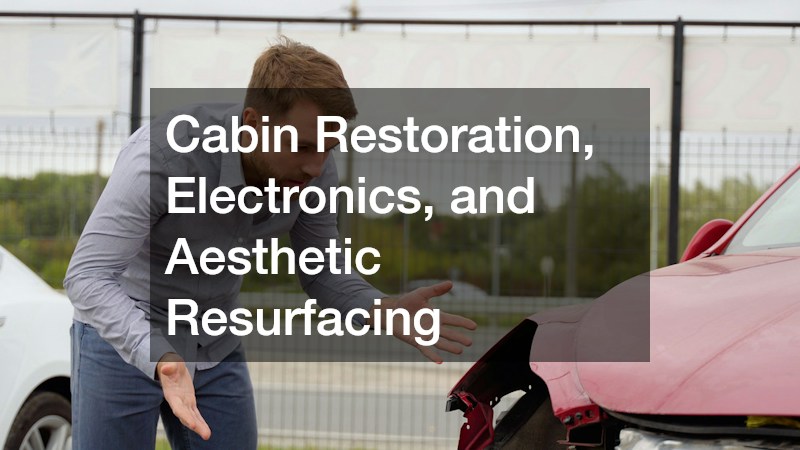
The final frontier of salvaging a collision vehicle involves the interior passenger compartment, electronic accessories, and exterior finish. Restoring the passenger compartment is not merely about making the cabin look presentable; it directly addresses passenger safety, electrical functionality, and odor prevention. A damaged vehicle cabin often hides shattered tempered safety glass, water damage, and deployed safety restraints.
Restoring an interior following an accident that deployed supplemental restraint systems (SRS) demands meticulous component replacement:
- Airbag Modules and Steering Wheels: Deployed steering wheel airbags, passenger dashboard bags, and side curtain assemblies must be replaced with certified un-deployed modules. Never purchase salvaged airbags from unverified online sources, as counterfeit or recalled units present severe safety hazards.
- SRS Computer Modules: The central airbag control module stores hard crash codes that permanently disable the restraint system. This module must be sent to a specialized laboratory for micro-soldering and firmware flashing, or replaced with an un-coded module programmed to the vehicle’s specific Vehicle Identification Number (VIN).
- Moisture and Glass Remediation: If windows shattered during the accident, extract every trace of broken glass from heating ducts, seat tracks, and inner door cavities. Wet carpets resulting from storage in open yards must be pulled, sanitized, and dried completely to prevent mold spore formation inside the padding.
Modern vehicle collisions frequently damage complicated interior infotainment and acoustic architectures. Door shells crush inward, crushing audio speakers, severing main wiring channels, and shorting multiplex communication networks. Furthermore, factory center consoles housing fragile liquid crystal touchscreen displays often crack or freeze when knee-bolster airbags fire upward.
Rather than spending thousands on proprietary, outdated factory displays, an owner can bring the vehicle to an independent car audio store. Experienced automotive electronics specialists can repair damaged door wiring harnesses, replace crushed factory speakers with high-efficiency aftermarket acoustic drivers, and integrate modern touchscreen head units featuring updated navigation, backup cameras, and smartphone integration.
A cost-effective alternative involves utilizing modern car wrap services. Rather than paying for extensive paint labor, you can prep replacement panels with basic protective primer and apply a complete vinyl vehicle wrap across the entire exterior. High-performance cast vinyl wraps seal the underlying metal, provide complete color uniformity across mismatched panels, and allow you to select from unique gloss, matte, or satin colorways at a substantial cost savings compared to a conventional multi-stage respray.
Whether your ultimate goal is to keep the rebuilt car as a dependable daily commuter, retain it as an economical utility work truck, or sell it with full disclosure to turn a solid financial return, the salvage process empowers you. Understanding the mechanics of collision reconstruction ensures that you make informed, profitable decisions at every stage of the recovery process.